 Zayne ForgeA division of Aksutra Intelligence Labs
Zayne Forge is acreature design +worldbuilding studio.
Alien lifeforms. Extinct life. Film · docs · brands.
Work
Three disciplines.
Creature design
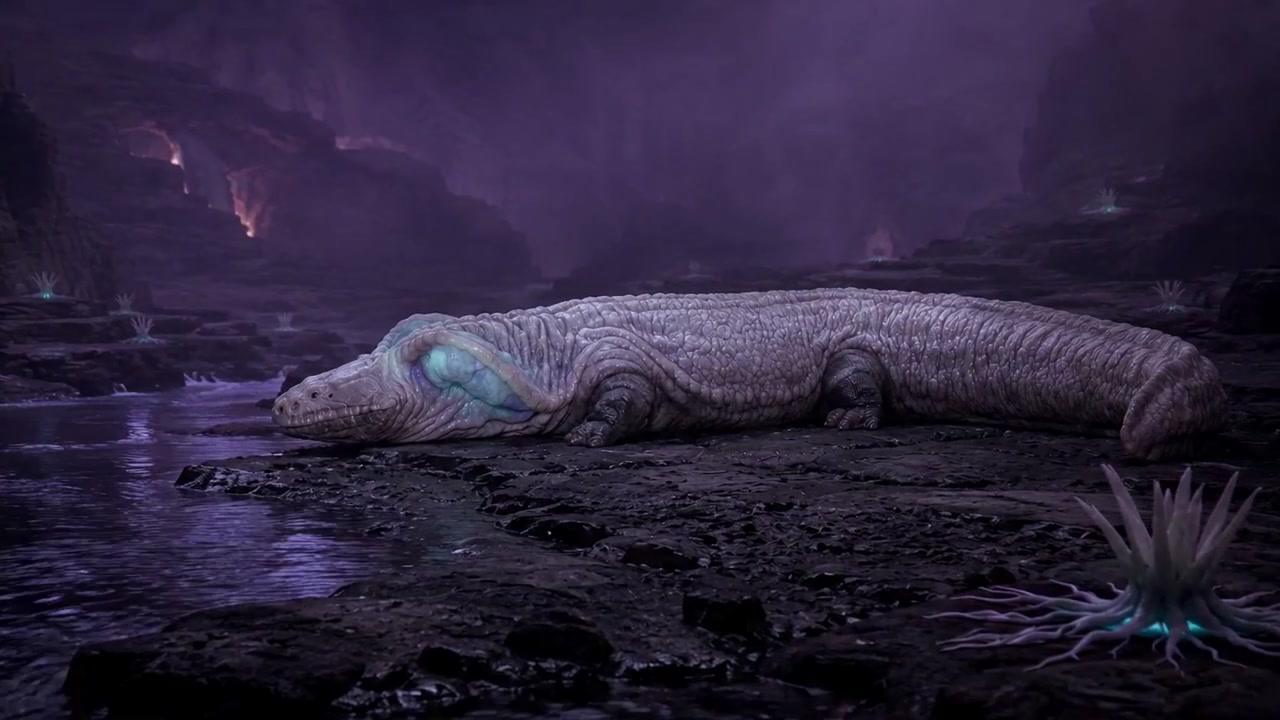
Original lifeforms, alien species, and extinct organisms — designed from anatomy up.
Worldbuilding
Ecosystems, biomes, and natural histories for fictional and documentary worlds.
Film, docs, brands
Visual development for narrative film, natural history documentaries, and brand worlds.
What We Do
Creative AI, built on
engineering discipline.
Zayne Forge uses third-party AI models — but the work is not the model. The work is the internal system around it: the pipeline, the quality control, the anatomical logic, and the production standards that turn raw model output into deliverable creative assets.
Creature Design
Original lifeforms, alien species, and extinct organisms — designed from anatomy up. Every creature is built with biological plausibility: skeletal structure, musculature, locomotion, and ecological niche are established before a single visual is generated. This is not prompt-and-hope. This is designed.
Worldbuilding
Complete ecosystems, biomes, and natural histories for fictional and documentary worlds. We construct the food chain, climate systems, and evolutionary pressures that shape each environment — so the world feels lived-in, not decorated. Film studios and documentary producers use these worlds as production-ready references.
AI Film & Brand Content
Visual development for narrative film, natural history documentaries, and brand worlds. We handle the full pipeline: concept, visual development, sequence design, and final delivery. Every output is production-grade — color-accurate, resolution-appropriate, and ready for editorial integration.
Our Approach
The model is a tool.
The discipline is the work.
AI models are powerful and increasingly accessible. What separates production-ready creative work from impressive demos is not the model — it is the system around it. The pipeline. The review protocol. The anatomical logic. The color science. The version control.
Zayne Forge is built on that principle. We use third-party AI models as one tool in a larger workflow — alongside human creature designers, anatomical reference libraries, and film-industry quality gates. The model proposes. We curate, correct, and deliver to international production standards.
New at the forge · Archaeological reconstruction
The ancient world, rebuilt from evidence.
Zayne Forge reconstructs what time has taken — sites, objects, people and the life around them — from the archaeological record, for museums, documentaries, publishers and film.
Explore reconstructionWhat We Believe
Four principles that
govern every output.
Biology before pixels.
A creature that looks cool but breaks anatomical logic is a prop, not a design. We start with skeleton, muscle, and movement — the same way a creature designer at ILM or Weta would. The AI accelerates the rendering. It does not replace the thinking.
The model is a tool, not a team member.
We use third-party AI models because they are powerful. But we never confuse model output with finished work. Every asset passes through human review, anatomical validation, and production-quality checks before it reaches a client. The model proposes. We curate, correct, and deliver.
International standard, not local premium.
Our work is benchmarked against studios in London, Los Angeles, and Wellington. Color science, resolution, file delivery, and revision protocols follow film-industry standards. Clients in Dubai, Singapore, and the US receive the same production discipline as clients in Mumbai.
Internal systems are the moat.
Anyone can access the same AI models we use. What they cannot replicate is the pipeline: our reference libraries, our quality gates, our anatomical checklists, our version control. These systems are what make the difference between a pretty image and a deliverable asset. They are also what makes us defensible.
“We are not an AI agency that makes art. We are a creative studio that uses AI — on our terms.”
Research & Development
The systems behind
the work.
Our advantage is not the AI model — anyone can access those. Our advantage is the internal R&D that makes the model output production-ready. This is what separates a deliverable from a demo.
3x
Faster than traditional creature design
Internal pipelines compress weeks of iteration into days — without skipping the anatomy, review, or quality stages.
100%
Human-reviewed output
No asset ships without passing anatomical validation, color check, and production-format review. The model proposes. We decide.
Intl.
Film-industry delivery standards
Color-managed, resolution-appropriate, format-correct. Ready for editorial integration at studios in London, LA, or Singapore.
Anatomical Reference Library
A curated database of skeletal structures, musculature, and locomotion patterns from extant and extinct species. Every creature design is cross-referenced against real biology before it enters production. This is why our creatures move like they could exist — because their anatomy is grounded in evolutionary logic, not prompt chance.
Pipeline Engineering
Custom internal pipelines that chain multiple AI models with deterministic quality gates. A creature goes through concept, anatomy check, lighting pass, and resolution upscale — each stage validated before the next begins. This is the same approach software engineers use for CI/CD, applied to creative production.
Color Science & Delivery Standards
Every output is color-managed for the target medium — Rec. 709 for broadcast, DCI-P3 for theatrical, sRGB for web. We deliver in the exact specifications your post-production team expects. No surprise color shifts, no resolution gaps, no format incompatibilities.
Version Control & Revision Protocol
Every asset is versioned. Every revision is tracked. You can request a change to a creature's jawline on Tuesday and see exactly what changed from Monday's version. This is standard in software development. It is almost unheard of in AI creative work. We brought it because clients delivering to international standards need it.
International Standards
Built for studios that ship to the world.
Whether you are delivering a documentary to a streaming platform in Singapore, a brand film to a studio in Dubai, or a feature to a distributor in Los Angeles — the work arrives in the format, resolution, and color space your pipeline expects. No rework. No surprises.
Structure
Six departments.
One pipeline.
Zayne Forge is structured the way a production studio is structured — not the way an AI tool is structured. Each department owns its stage of the pipeline. Nothing moves forward until it passes the gate.
Research & Development
The pipeline is built here.
The R&D department designs the internal systems that make Zayne Forge defensible — the anatomical reference libraries, the model chaining pipelines, the quality gates. This is engineering work, not creative work. It is also the reason every output is repeatable, not accidental.
Creature Design
Anatomy first. Always.
Creature designers establish skeletal structure, musculature, and locomotion before any visual is generated. The AI accelerates rendering. It does not replace the biological logic that makes a creature feel like it could exist. Every design is cross-referenced against real evolutionary mechanics.
Cinematography & Direction
The frame is intentional.
Every shot is composed before it is generated. Camera angle, lens choice, lighting direction, and focal depth are specified the same way a director of photography specifies them on a physical set. The AI renders the frame. The cinematographer decides what the frame is.
Color & Finishing
Delivery-grade color science.
Color specialists manage the full pipeline — from generation through grading to delivery. Outputs are color-managed for the target medium: Rec. 709 for broadcast, DCI-P3 for theatrical, sRGB for web. No surprise shifts. No format incompatibilities. Ready for editorial integration.
Animation & Motion
Movement that obeys physics.
Animators define locomotion cycles, weight transfer, and gait mechanics before motion is applied. A creature that looks correct in a still frame but moves incorrectly breaks the illusion instantly. Our animation department ensures that does not happen — frame by frame.
Editing & Post-Production
The final gate.
The editing department assembles sequences, manages pacing, and runs the final quality check before any asset reaches a client. This is where inconsistencies are caught, formats are verified, and delivery specifications are confirmed. Nothing ships without passing this stage.
“The model is one tool in the pipeline. The pipeline is the studio.”
Portfolio
Explore the work.
Each section opens its own dedicated gallery. Images and videos are kept separate so the work can be viewed cleanly.
ContactFor commissions, collaborations, and research inquiries.